Stories from the Forge
From Armistice Day to Veterans Day

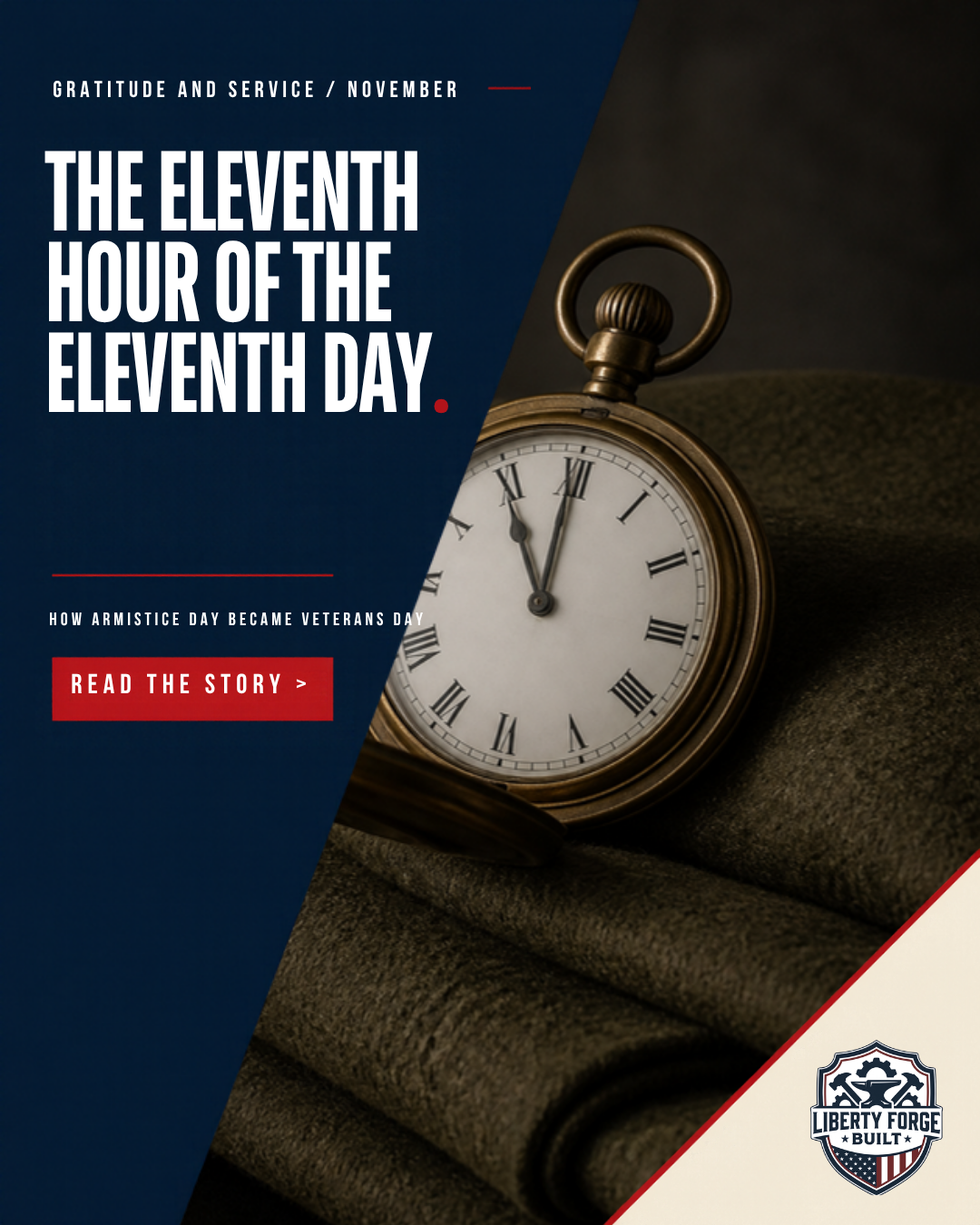
Veterans Day falls on November 11 for a reason that has nothing to do with a convenient spot on the calendar. It marks a specific moment: the eleventh hour of the eleventh day of the eleventh month of 1918.
That is when the armistice between the Allies and Germany took effect and the fighting of World War I stopped. The U.S. Army Center of Military History notes that it was a pause in hostilities, not the formal end of the war. The Treaty of Versailles followed in 1919.
The day has changed names and dates since then. The reason for it has not.
1919: The First Armistice Day
On November 11, 1919, President Woodrow Wilson proclaimed the first Armistice Day. He wrote that its reflections would be “filled with solemn pride in the heroism of those who died in the country’s service.” According to the Army’s history, the original idea included a two-minute pause in business beginning at 11 a.m., along with parades and public meetings.
1926 and 1938: Making It Official
In 1926 Congress passed a resolution asking the President to issue an annual proclamation for the day. Through the 1920s and 1930s, most states made November 11 a legal holiday on their own.
On May 13, 1938, Congress made November 11 a legal federal holiday, Armistice Day.
1954: Every Veteran, Not One War
World War II and the Korean War added millions of new veterans. A day named for the end of one war no longer covered everyone who had served.
On June 1, 1954, President Dwight D. Eisenhower signed legislation that changed the name from Armistice Day to Veterans Day. It did not create a new holiday. It widened an old one to honor American veterans of all wars.
The October Detour
In 1968 Congress passed a law moving several federal holidays to Mondays to create three-day weekends. Starting in 1971, Veterans Day was observed on the fourth Monday in October.
It did not stick. The Army’s history records that many states kept November 11 or moved back to it. In 1975 Congress passed legislation returning the federal observance to November 11, effective in 1978. It has stayed there since.
Why the Date Matters
The return to November 11 says something about how people felt about the day. A long weekend was convenient. The specific date meant more. It tied the holiday to a real moment when the guns went quiet and to the people who were there.
This year Veterans Day falls on a Wednesday. It will not be a long weekend for most people. That may be the point.
If you want a practical way to honor the day, our story on how to record a veteran’s story with the Library of Congress is a good place to start.
One thought on “From Armistice Day to Veterans Day”
Comments are closed.